同じ布団で寝るのは、危ないらしいよ
そう言ったら、妻が黙りました。
そのあと、静かにこう返ってきました。
妻:じゃあ、夜中に3回起きて授乳するとき、わたしは毎回立ち上がるの?
ぐっ、と詰まりました。正しさだけ振り回して、現実を何も考えていなかったからです。
なので調べ直しました。結論から言うと、ガイドラインは「添い寝文化をやめろ」とは言っていなかった。もっと具体的なことを言っていました。
目次
世界標準のガイドは、実際に何と言っているのか?
アメリカ小児科学会(AAP)が2022年に更新した安全な睡眠の指針で、中核として強調されているのはこの4つです。
- 仰向けで寝かせる(うつぶせ寝はリスク要因)
- 固くて傾いていない寝床で寝かせる
- 寝床の中に柔らかい寝具や物を置かない。暑くしすぎない
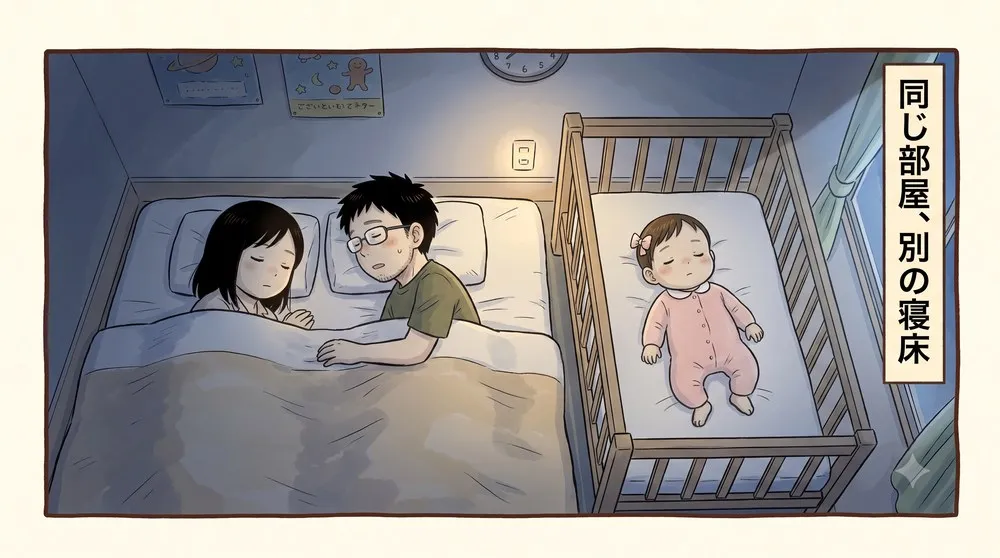
- 同じ部屋で、寝床は別にする(同室・別床)
加えて、母乳、禁煙、定期予防接種、必要に応じたおしゃぶりも、リスクを下げる要因として扱われています。
ここで大事なのは4つめです。「別の部屋で寝かせろ」ではなく「同じ部屋で、寝床だけ分ける」。うちが揉めていたのは、そこの読み違いでした。
日本の家庭は、どのくらい実践できているのか?
ここで出てくる数字が、なかなか強烈でした。
2024年に出た日本の研究(山口県の乳児の養育者を対象にした調査)では、96.0%が安全な睡眠環境を十分には実践できていなかったと報告されています。しかも、知識がまったくないわけではなかった。
知っているのに、できていない。
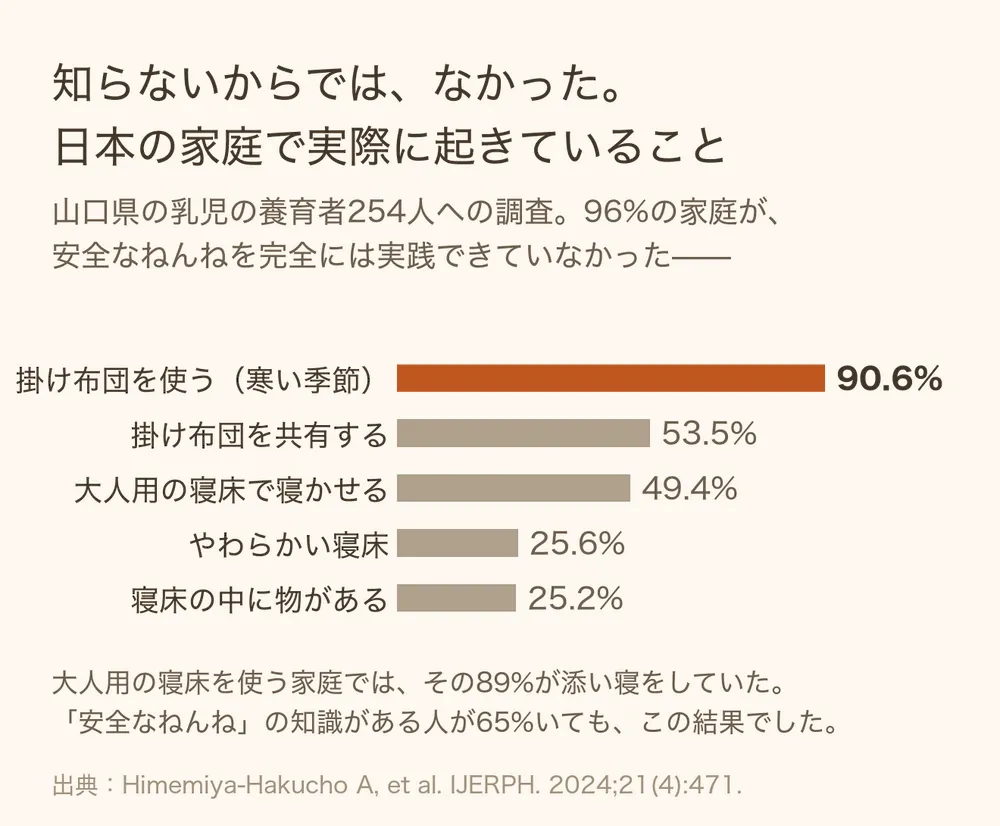
この構図には見覚えがあります。うちも、ぬいぐるみを1つだけベビーベッドに入れていました。かわいかったので。
アジア全体を比べた研究でも、就寝時刻が遅く、総睡眠時間が短く、同室で寝ることが多いという傾向が示されています。日本の古い症例対照研究でも、うつぶせ寝がSIDS(乳幼児突然死症候群)のリスク要因であることが示されてきました。
つまりアジアの研究は、世界標準の推奨を「不要」と言っているわけではない。実行しにくい事情のほうを教えてくれているという読み方が正確でした。
では、うちはどう折り合いをつけたか?
文化を否定するより、危険要因を減らす設計にする。それがいちばん現実的だという結論になりました。
やったことは地味です。
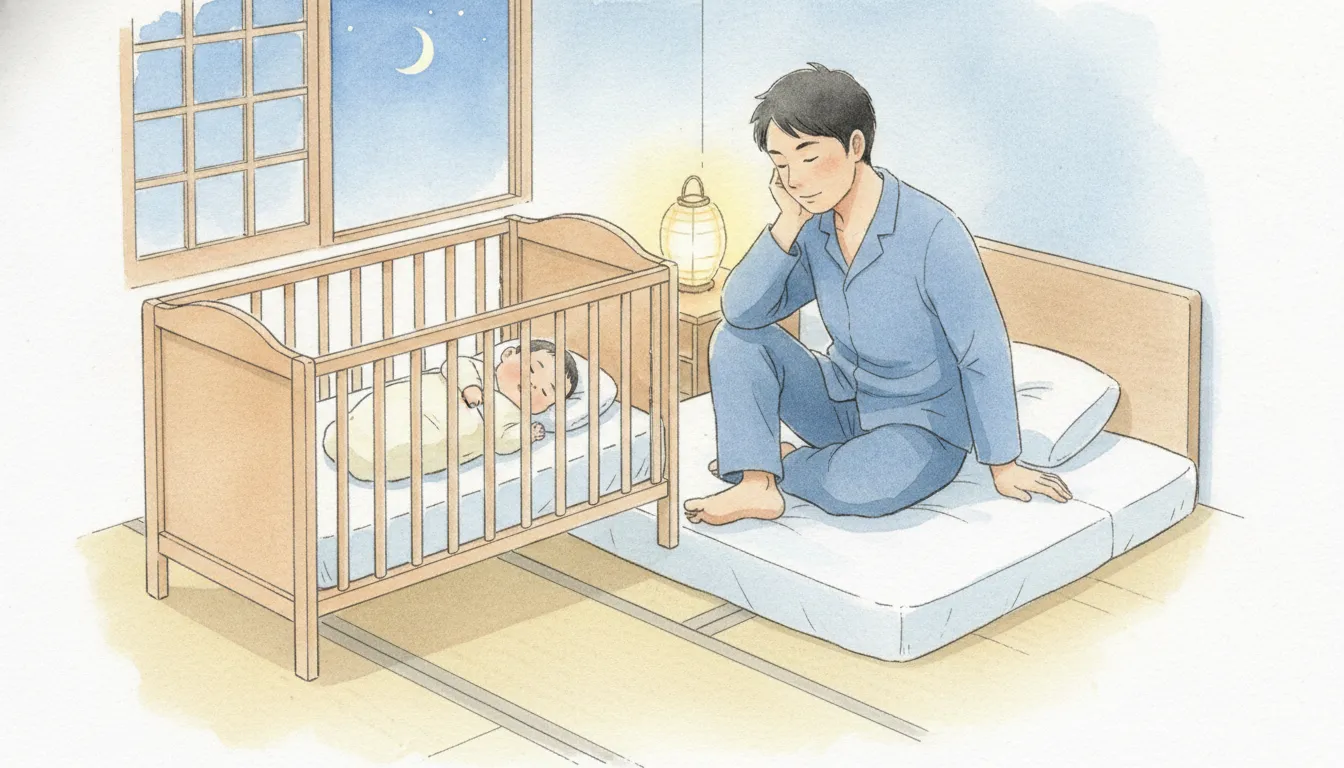
- ベビーベッドを親の布団のすぐ横に寄せた(手は届く、寝床は別)
- ベッドの中をシーツだけにした。ぬいぐるみとタオルは外へ退場
- 寝るときは毎回仰向け。着せすぎない
- 夜間授乳のあと、そのまま寝落ちしないように、置く場所を先に決めておく
最後のひとつが、いちばん難しいです。眠いので。
ちなみに寝床の作りやソファでの寝落ちなど、個別の環境の判断は自己流でやらないほうがいいと思います。健診や小児科で、実際の配置を話して確認するのが確実です。
まとめ
ガイドラインは、うちの暮らしを否定しに来たわけではなかった。仰向け・固い寝床・何も置かない・同室別床、この4つだけ持って帰ればよかったんです。
なお、退場したぬいぐるみは、今は僕の枕元にいます。なぜ。
にじパパ「エビデンス育児」関連記事
- 午前3時の検索で、残ったのは不安だけでした。育児情報の読む順番(シリーズ目次)
- 育児本を無言で閉じた話。予防接種のスケジュールは、今日の公式が正しい
- 泣き声が聞こえなかった夜の話
- シリーズ「エビデンス育児」一覧
※この記事は論文・公的資料の紹介で、診断や治療の代わりにはなりません。睡眠環境は住居や家族構成で条件が変わります。実際の寝床の配置は、健診やかかりつけの小児科で相談してください。
主な出典:AAP 安全な睡眠に関する方針声明・技術報告(2022年更新)/日本の乳児の安全な睡眠環境の実践に関する横断研究(2024)/アジアを中心とした乳幼児の睡眠文化の多国間比較研究/日本のSIDSとうつぶせ寝に関する症例対照研究/こども家庭庁 母子健康手帳情報支援サイト。詳しくは こども家庭庁・厚生労働省 へ。
It Never Said "Stop Co-Sleeping": Building a Safe Sleep Environment (A Serious One)

So apparently it's dangerous for the baby to sleep in the same futon as us
When I said that, my wife went quiet.
Then, very calmly, this came back.
Wife: So when I'm up three times a night nursing, I'm supposed to get up every single time?
I had no comeback. I'd been waving correctness around without giving a second's thought to reality.
So I went back and did the reading. Bottom line: the guidelines never said "abandon your co-sleeping culture." They were saying something much more specific.
Contents
- What does the global standard guideline actually say?
- How well are Japanese households actually doing this?
- So how did we make it work at our house?
What does the global standard guideline actually say?
In the safe sleep guidance that the American Academy of Pediatrics (AAP) updated in 2022, these four points are emphasized as the core.
- Put the baby to sleep on their back (stomach sleeping is a risk factor)
- Use a firm, non-inclined sleep surface
- Keep soft bedding and objects out of the sleep area; don't let the baby overheat
- Same room, separate sleep surface (room-sharing without bed-sharing)
On top of these, breastfeeding, not smoking, routine vaccinations, and a pacifier where appropriate are also treated as factors that lower risk.
The one that matters here is number four. Not "put the baby in a separate room" — "the same room, with just the sleep surface separate." The argument at our house had been built on misreading exactly that.
How well are Japanese households actually doing this?
This is where the numbers got pretty stark.
A Japanese study published in 2024 (a survey of infant caregivers in Yamaguchi Prefecture) reported that 96.0% were not fully practicing a safe sleep environment. And it wasn't that they had no knowledge at all.
They knew. They just weren't doing it.
I recognized this picture. We had exactly one stuffed animal in the crib, too. Because it was cute.
Research comparing countries across Asia points the same way: later bedtimes, shorter total sleep, and more room-sharing. And older Japanese case-control research has likewise shown that stomach sleeping is a risk factor for SIDS (sudden infant death syndrome).
In other words, the Asian studies aren't saying the global-standard recommendations are "unnecessary." The accurate reading is that they're documenting the circumstances that make them hard to follow.
So how did we make it work at our house?
Rather than rejecting the culture, design the risk factors out. That, we concluded, was the most realistic path.
What we actually did is deeply unglamorous.
- Pulled the crib right up beside the parents' futon (within arm's reach, separate sleep surface)
- Stripped the inside of the crib down to just the sheet. The stuffed animal and the towel were escorted off the premises
- On the back, every single sleep. No overdressing
- Decided in advance where the baby goes down after a night feed, so that nobody just drifts off mid-hold
That last one is the hardest. On account of being sleepy.
One more thing: for judgment calls about your specific environment — how the bedding is set up, dozing off on the sofa, and so on — I really don't think you should improvise. The sure way is to describe your actual sleep arrangement at a checkup or to your pediatrician and have them look at it.
The Takeaway
The guidelines never came to condemn the way we live. All we had to carry home were the four things: on the back, a firm sleep surface, nothing in the bed, same room but separate beds.
As for the evicted stuffed animal — it now lives next to my pillow. Why.
More from Nijipapa's "Evidence-Based Parenting" series
- All my 3 a.m. searching left me with was anxiety. A reading order for parenting information (series index)
- The day I quietly closed the parenting book. For vaccine schedules, today's official source is the right one
- The night I didn't hear the crying
- Browse the full "Evidence-Based Parenting" series
Note: this post introduces published research and official resources; it is not a substitute for diagnosis or treatment. Sleep environments depend on your housing and household, so please discuss your actual sleep setup at a checkup or with your regular pediatrician.
Main sources: the AAP policy statement and technical report on safe sleep (2022 update); a cross-sectional study on safe infant sleep environment practices in Japan (2024); a multi-country comparison of infant and young-child sleep culture centered on Asia; Japanese case-control research on SIDS and stomach sleeping; and the Children and Families Agency's Maternal and Child Health Handbook information site. For more, see the Children and Families Agency and Japan's Ministry of Health, Labour and Welfare (MHLW).